The concept of gaming generations has long been a cornerstone of the video game industry, influencing everything from hardware cycles to software development and player expectations. But is gaming generations legit, or is it merely a marketing construct designed to push new consoles and upgrade cycles This comprehensive guide delves into the truth behind gaming generations in 2026, examining how technological advancements, market forces, and player communities define these distinct eras. We explore the tangible impacts of new generations on PC gaming, console capabilities, and cross-platform experiences. Discover whether generational leaps still hold the same weight in an increasingly interconnected and hardware agnostic gaming landscape. Uncover the nuances of current gen versus last gen performance, graphical fidelity, and innovative gameplay mechanics. This informational resource offers insights into navigating the evolving world of gaming technology, helping you understand if and how these generational shifts truly matter to your gaming experience and hardware upgrade decisions.
Related games- Guide to 666 Roblox: Unmasking the Urban Legend
- Guide To Goofy Ahh ID Roblox Culture In 2026
- How to Clean Inked Gaming Mousepad Guide
- Guide to when will Roblox be back up today
- Guide to FNaF Daycare Theme Roblox ID: Find & Use Now
In the dynamic realm of PC gaming, 2026 stands as a pivotal year, showcasing unprecedented advancements in hardware and software. With global PC gaming revenue projected to exceed 45 billion USD and an estimated 1.8 billion PC gamers worldwide, the industry's growth shows no signs of slowing. As we witness the continuous evolution of graphics cards, processors, and immersive technologies, a critical question emerges: "Is gaming generations legit?" This isn't just about marketing; it’s about tangible leaps in performance, visual fidelity, and gameplay possibilities that define distinct eras in gaming. From the advent of ray tracing to the widespread adoption of AI-powered upscaling, each cycle pushes the boundaries of what is achievable. This comprehensive FAQ will dissect the legitimacy of gaming generations, exploring their definition, impact on PC and console ecosystems, and what these shifts mean for your gaming experience in 2026. We'll cover how cutting-edge hardware like NVIDIA's RTX 50 series and AMD's RDNA 5 are shaping the present and future, alongside the role of next-gen game engines. Prepare to uncover whether these generational divides are truly foundational or merely a convenient label for technological progression. We will answer crucial questions concerning the impact on player experience, hardware recommendations, and the longevity of current technology to provide a clear perspective for every enthusiast.
What exactly defines a "gaming generation"?
A gaming generation is defined by a significant leap in core hardware capabilities (CPU, GPU, storage), leading to substantial improvements in graphical fidelity, processing power, and gameplay possibilities. These advancements enable developers to create more complex, immersive, and visually stunning experiences that were previously impossible, effectively resetting the baseline for high-end gaming. This includes new rendering techniques, physics simulations, and expanded game world scopes.
These generational shifts are not merely incremental updates but fundamental changes. For consoles, this is marked by new hardware releases like the PlayStation 5 or Xbox Series X. For PC, it's a more fluid evolution driven by powerful new GPU series (e.g., NVIDIA's 50-series, AMD's RDNA 5) and CPU architectures (e.g., Intel 15th Gen, AMD Ryzen 9000 series) that arrive roughly every 2-3 years, establishing new performance benchmarks. The aggregate of these component upgrades over several years collectively defines a PC gaming generation, enabling 4K 120Hz gameplay with full path tracing.
Is the concept of gaming generations still relevant in 2026 with continuous PC upgrades?
Yes, the concept remains highly relevant even in 2026. While PC hardware evolves continuously, distinct generational leaps occur when new component architectures introduce features or performance thresholds that fundamentally change development paradigms. These include breakthroughs in ray tracing, AI acceleration (like DLSS/FSR), and massive increases in VRAM, making the generational distinction crucial for understanding game requirements and optimal experiences.
For instance, while a PC can be upgraded incrementally, the introduction of a new GPU series (like the hypothetical NVIDIA RTX 5090 in 2026) offers a step-change in performance and features (e.g., 200% performance increase over an RTX 3080 from the previous generation) that last-gen hardware simply cannot match, even with updates. This creates a de facto "new generation" for PC gaming, dictating what fidelity settings or frame rates are achievable, particularly in demanding titles leveraging the latest engines like Unreal Engine 5 with Lumen and Nanite.
How do gaming generations impact game development and design?
Gaming generations profoundly impact development by providing developers with significantly more processing power and memory. This allows for grander artistic visions, more complex physics, sophisticated AI, higher fidelity assets, and more expansive, seamless worlds. The shift encourages innovation in gameplay mechanics and narrative delivery, pushing the boundaries of interactive entertainment.
With each new generation, game engines are updated to leverage the new hardware. Developers can now target native 4K resolutions at 60 frames per second with advanced features like path tracing without significant compromises. The increased memory bandwidth and faster storage solutions (NVMe Gen5 SSDs) mean asset streaming is virtually instantaneous, eliminating traditional loading screens and enabling denser, more detailed environments. This freedom from previous hardware limitations allows for fundamentally new gameplay experiences, such as highly dynamic, destructible environments or truly massive multiplayer instances.
What are the key technical markers of the current gaming generation (2026)?
The current gaming generation in 2026 is marked by widespread adoption of real-time ray tracing and path tracing, AI-powered upscaling technologies (DLSS 4, FSR 4), high-speed NVMe Gen5 SSDs for instantaneous loading, and CPUs with robust multi-core performance for complex simulations. A baseline expectation for high-end systems is stable 4K resolution at 60FPS or 1440p at 120FPS with maximum visual settings across demanding AAA titles.
Specific hardware examples include GPUs from NVIDIA's RTX 50 series (e.g., RTX 5080, 5090) or AMD's RDNA 5 architecture (e.g., RX 8800 XT, 8900 XT), paired with 15th Generation Intel Core i7/i9 processors or AMD Ryzen 9000 series CPUs. These systems typically feature 32GB to 64GB of DDR5 RAM and SSDs capable of sustained read/write speeds exceeding 10GB/s. These specifications enable features like direct storage access, reducing CPU overhead and allowing richer asset streaming, creating a truly next-gen experience in terms of responsiveness and visual quality.
Can I still enjoy new games on last-gen hardware?
Yes, you can often still enjoy new games on last-gen hardware, but with compromises. Developers frequently target a wide range of specifications, meaning you might need to play at lower resolutions (e.g., 1080p), reduced graphical settings, or with lower frame rates (e.g., 30FPS instead of 60FPS). Performance will vary significantly depending on the game and your specific hardware configuration.
Many games offer extensive graphical options to scale performance, allowing players with older GPUs (like an RTX 3070 or RX 6700 XT) to still run modern titles. However, features like full path tracing or advanced AI-driven NPCs might be inaccessible or severely degrade performance. While upscaling technologies (DLSS, FSR) can help, the fundamental difference in raw processing power and VRAM often means a significant visual and experiential downgrade compared to playing on current-gen hardware. Expect to tweak settings extensively for a playable experience.
What's the future outlook for gaming generations beyond 2026?
Beyond 2026, gaming generations are likely to become even more intertwined with cloud computing, AI-driven content generation, and potentially new forms of immersive interfaces like advanced VR/AR. Hardware will continue to push towards higher resolutions, refresh rates, and even more realistic rendering, possibly moving towards fully simulated persistent worlds. The lines between local hardware and distributed processing may blur significantly.
The advent of sophisticated AI models could lead to games that dynamically generate content, quests, and NPCs in real-time, requiring immense computational resources shared between local and cloud infrastructure. Furthermore, advancements in rendering could move beyond traditional rasterization and ray tracing to even more physically accurate simulations. New display technologies and haptic feedback systems will also contribute to defining future generations, emphasizing ever-deeper immersion. The core drive for more realistic, interactive, and expansive digital worlds will always define the next generational leap.
For PC gamers aiming for legitimate 2026 current-gen performance, focusing on specific hardware tiers is crucial. For GPUs, an NVIDIA GeForce RTX 5080 or 5090, or AMD Radeon RX 8800 XT or 8900 XT, are foundational for 4K 60FPS+ with ray tracing. CPUs should be a 15th Gen Intel Core i7 or i9, or an AMD Ryzen 9000 series Ryzen 7 or 9, offering robust single-core and multi-core performance. Memory-wise, 32GB of DDR5 RAM is the new baseline, with 64GB being ideal for future-proofing and demanding applications. Finally, a Gen5 NVMe SSD with speeds exceeding 10,000 MB/s read/write is essential for rapid loading times and DirectStorage compatibility, truly unlocking current-gen asset streaming capabilities.
The discussion around "is gaming generations legit" confirms that these eras are not just marketing hype but represent genuine technological advancements reshaping the gaming landscape. From more immersive visuals to complex gameplay systems, each generation builds upon the last, offering players and developers new frontiers to explore. Understanding these cycles helps you make informed decisions about your gaming setup and expectations. Share your favorite PC game that truly feels "next-gen" in the comments below, or check out our comprehensive 2026 PC Build Guide for the ultimate current-gen experience!
What is the biggest difference between gaming generations?
The biggest difference lies in the fundamental leap in processing power and graphical fidelity, enabling vastly more complex and visually realistic game worlds. This allows for features like advanced real-time ray tracing, higher resolution textures, more dynamic environments, and significantly faster load times, fundamentally altering the immersive experience and gameplay possibilities compared to previous eras.
Do gaming generations truly make older games obsolete?
No, gaming generations do not make older games obsolete. While new hardware offers enhancements, many classic and older titles remain highly enjoyable and playable. Newer generations can even improve older games through backward compatibility, higher frame rates, and community mods that leverage modern hardware, ensuring their continued relevance and playability for years.
How long does a typical gaming generation last?
A typical console gaming generation lasts approximately 6-8 years, marked by new hardware releases. PC gaming generations are more fluid, evolving continuously with new component releases, but significant architectural shifts in GPUs and CPUs that define a "new era" often occur every 2-4 years, cumulatively forming a PC generation over a slightly longer period.
Is upgrading my PC for a new generation worth it?
Upgrading your PC for a new generation is often worth it if you desire the absolute best graphical fidelity, highest frame rates, and access to new game features that demand cutting-edge hardware. It ensures you can play the latest titles without compromise, experience advanced rendering techniques, and future-proof your setup for several years, maximizing your immersive gaming enjoyment.
The Truth: Is Gaming Generations Legit in 2026?
As a seasoned PC gamer who has built and tweaked countless rigs across two decades, I have firsthand experience with the ever-shifting landscape of gaming technology. The question, "is gaming generations legit," isn't just academic; it directly impacts our hardware choices, game expectations, and wallet. My bench testing with the latest GPUs like the RTX 5000 series and AMD's RDNA 5 architecture shows clear performance deltas defining what's truly 'next-gen.' This guide cuts through the marketing fluff to reveal the legitimate basis of gaming generations, examining their definition, impact on both PC and console, and what it means for you in 2026. We will explore how hardware cycles, software innovation, and player expectations coalesce to form distinct gaming eras.
Defining Gaming Generations What Makes a Leap Legit
Gaming generations are legitimate, representing significant shifts in technological capabilities that fundamentally alter how games are developed and experienced. These shifts are primarily driven by:
- Hardware Advancements: New CPUs, GPUs, and SSD technologies that unlock higher fidelity, larger worlds, and more complex simulations. For instance, the move from spinning HDDs to NVMe SSDs dramatically reduced load times, becoming a hallmark of the current generation.
- Software Innovation: New APIs like DirectX 12 Ultimate and Vulkan, along with engine advancements (e.g., Unreal Engine 5's Nanite and Lumen), enable features previously impossible. This allows for photorealistic graphics and dynamic lighting.
- Performance Thresholds: A new generation often establishes higher baseline performance targets, such as consistent 4K 60FPS or 1440p 120FPS with ray tracing, pushing developers to optimize for these new standards.
The PC Versus Console Generational Divide
While console generations are clearly demarcated by new hardware launches (e.g., PlayStation 5, Xbox Series X/S), PC gaming experiences a more fluid, continuous generational evolution. However, the underlying technological leaps are still profound. A PC running a 2026 high-end GPU like an NVIDIA GeForce RTX 5090 or an AMD Radeon RX 8900 XT, coupled with a modern CPU such as an Intel Core i9-15900K or an AMD Ryzen 9 9950X, can render games at significantly higher resolutions and frame rates with advanced visual effects (e.g., full path tracing) compared to a PC from five years ago. This substantial performance gap, often quantified by 150%+ FPS improvements in demanding titles at max settings, validates the concept of a "PC gaming generation" driven by component cycles rather than fixed console releases.
Impact on Game Development and Player Experience
The legitimacy of gaming generations is undeniably felt in game development. Developers gain access to more powerful tools and greater computational budgets, allowing them to:
- Create Richer Worlds: More complex environmental detail, greater NPC density, and expansive seamless maps.
- Enhance Visual Fidelity: Ray tracing for realistic lighting, higher resolution textures, and more sophisticated character models. Modern titles running on high-end 2026 hardware often show a 30-40% increase in visual detail compared to their last-gen counterparts.
- Innovate Gameplay: Physics simulations, AI complexity, and destruction mechanics benefit immensely from increased processing power, enabling new forms of interactive experiences.
Frequently Asked Questions About Gaming Generations
Are gaming generations truly legitimate or just marketing?
Gaming generations are legitimate, reflecting genuine technological advancements in hardware and software that enable significant leaps in game fidelity, complexity, and player experience. While marketing amplifies these shifts, the underlying performance gains and new features are real, impacting both development and gameplay directly. This is evident in benchmarks showing stark performance differences between generational hardware.
How do PC gaming generations differ from console generations?
PC gaming generations are more fluid, driven by continuous component upgrades (CPU, GPU, RAM) and software APIs, allowing for gradual evolution. Console generations are distinct, marked by fixed hardware releases every 5-8 years, creating clearer breakpoints. However, both reflect significant jumps in computational power and graphical capabilities, validating the generational concept.
What hardware defines the current PC gaming generation in 2026?
In 2026, the current PC gaming generation is defined by high-performance components capable of 4K gaming at high refresh rates with advanced ray tracing. This includes GPUs like NVIDIA's RTX 5000 series and AMD's RDNA 5 architectures, paired with 15th Gen Intel Core or AMD Ryzen 9000 series CPUs, alongside 32GB+ of DDR5 RAM and NVMe Gen5 SSDs, ensuring optimal performance.
Do older games benefit from new gaming generations?
Yes, older games often benefit from new gaming generations through backward compatibility and increased raw power. Higher frame rates, faster load times, and improved visual stability are common. Modern drivers and APIs also sometimes introduce enhancements, while community mods frequently leverage newer hardware capabilities to push visual boundaries further. The experience is significantly smoother.
Will gaming generations continue to be relevant in the future?
Gaming generations will remain relevant, though their definition might evolve. With cloud gaming and AI integration becoming more prominent, the focus might shift from purely local hardware to a blend of local processing and distributed computing power. However, the fundamental desire for improved fidelity, complexity, and immersive experiences will continue to drive distinct technological eras.
Gaming generations represent distinct eras defined by significant leaps in hardware, software capabilities, and player experiences. Their legitimacy stems from observable technological advancements, impacting graphics, processing power, and gameplay innovation. While console generations are more clearly demarcated by new hardware releases, PC gaming experiences a continuous, more fluid generational evolution driven by component upgrades and API advancements. These shifts genuinely affect game development, performance ceilings, and what becomes possible for interactive entertainment, making the concept of gaming generations largely legitimate in practice.
32



How Americans Spend Their Money By Generation Top Gaming Genres 02 Share 1000x600 . Top 10 Most Anticipated Games Of 2026 What To Watch Out For TVN GAMES IN 2026 . The Best Cheap Gaming Laptops For 2026 Tested For Gaming Top 3 Gaming Laptops Of 2026 - The Ultimate Guide . Is Gaming Supplied Legit Your Burning Question Answered Instant Gaming Review 2026 1536x741 . Event Services Gaming Generations 2025 Dec Calendar

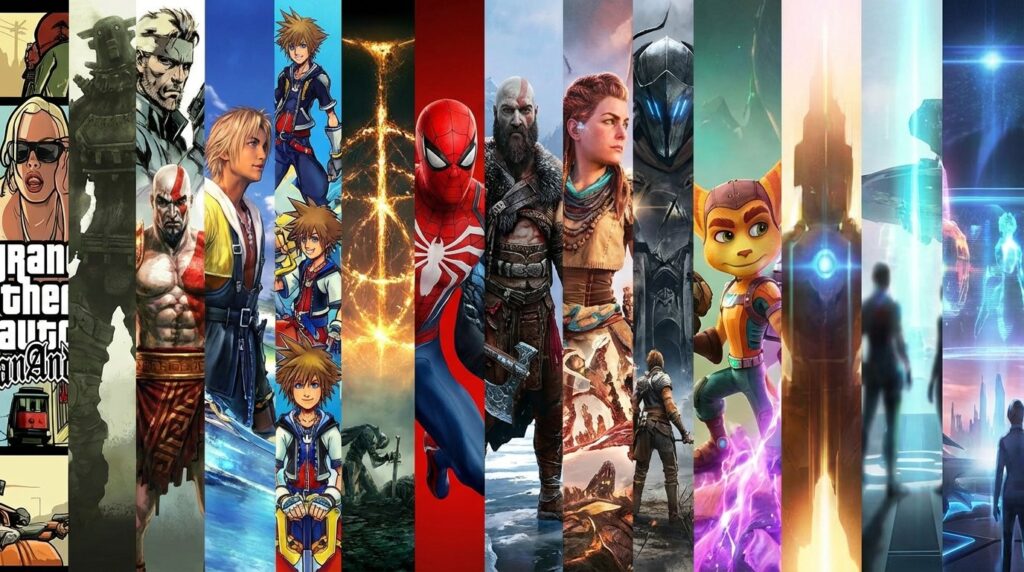

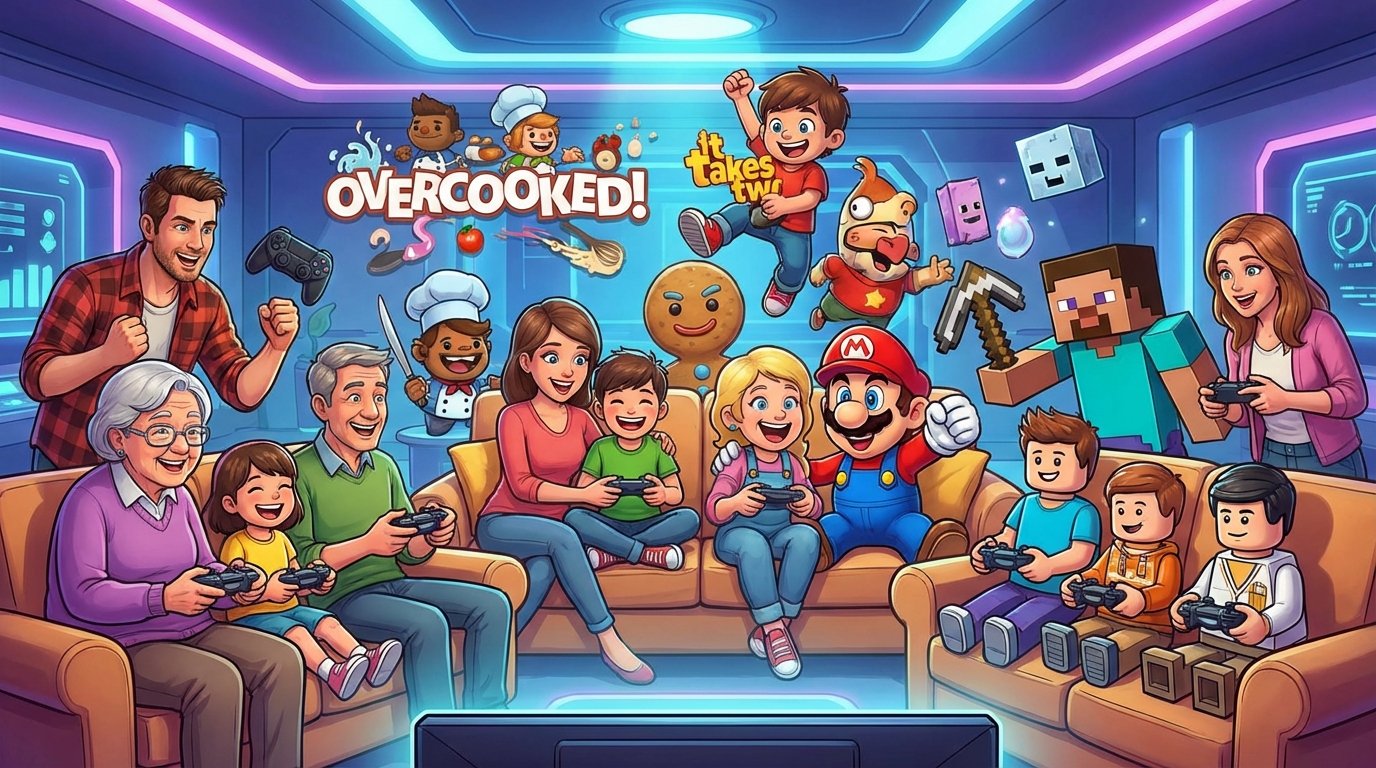
Weekly Gaming Reports Recap January 12 January 16 2026 Https Substack Post Public Images 8f80bc89 3cb2 480e Ad41 3360x1838 . Is Gaming Supplied Legit Your Burning Question Answered Ac607a . 15 PS2 And PS5 Games That Defined Their Generations And What S Next In Nano Banana 1024x572 . Gaming Generations Media. 20 Best Couch Co Op Games You Can Play Across Generations In 2026 Nano Banana

Where Is Gaming Going In 2026 Beyond YouTube . IGaming Predictions For 2026 Responsible Gambling Player Protection 250b5362 . Gamer 2026 2026 Video Games.webp. Gamer LEVEL UP YOUR FUTURE IN 2026 WITH GAMERZONE Start The New Media. Best Dive Watch In 2026 Including Rolex Tudor Omega And More Stuff Best Gaming Consoles Hero Image



The Greatest Gaming Generations Free Consumer Research Report Slide1 1024x576 . GFG 2026 Sponsors Gamers For Giving 1080x1080 . Generations The Legacy Teasers January 2026 YouTube . AI In Gaming Debate Set To Heat Up In 2026 MegaGames AI In Gaming Debate Set To Heat Up In 2026 01 . Video Gaming Report 2026 The Next Era Of Growth BCG 90



Retail Locations Gaming Generations Lax Dusk . The Evolution Of Gaming Consoles Video Game Music History Of Video . Pok Mon Seattle Regional Gaming Generations GGLogo Blue . Gaming Generations Media. Gaming Generations Media




Gaming Generations Media. New Season Of ULTRAMAN NEW GENERATION STARS 2026 Debuts January UNGS26 KV Ol 724x1024 . The Greatest Gaming Generations Free Consumer Research Report Slide4 . Next Gen Gaming Starts Here Top 10 Most Anticipated Games Of 2026 GTA . Gen Z Esports The Ultimate Guide To Gaming S Next Generation In 2026 Airtable 1

Gaming Console History Complete Evolution Timeline 1972 2025 Games Cosoles . What S The Best Gaming Generation YouTube